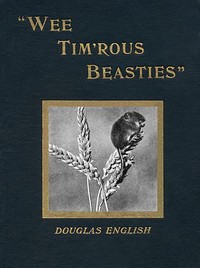
"Wee Tim'rous Beasties": Studies of Animal life and Character by Douglas English
I came across Wee Tim’rous Beasties: Studies of Animal Life and Character by Douglas English on a rainy afternoon and honestly, I had no idea it would pull me in this hard. It’s a 1900s little weird classic that feels way ahead of its time—part naturalist diary, part portrait gallery of British wild animals, and entirely obsessed with personality over facts.
The Story
Okay, it’s not a story so much as a series of intimate little essays. Each chapter focuses on one creature you might see in your own garden or nearby woods: rabbits, dormice, hedgehogs, stoats, voles, birds—even the lowly weasel. Douglas followed them, took notes, and drew them beautifully. And guess what? He doesn’t just name the parts. He tells you how a rabbit literally freezes mid-step, how a harvest mouse grips a grass stem and you can practically see its tiny determination. There’s no villain, no plot twist—but there is a quiet secret. The conflict is nature itself: weather, predators, instinct. And English was absolutely fascinated by how his beasties coped day-to-day.
Why You Should Read It
What got me was how softly this book humanizes animals—super gently walking this line without dragging them into cartoons. English gives them bravery, caution, cunning, silliness. I’m talking footnotes on “how to tell if a stoat is laughing at you.” It reads like a love letter from someone who knows that if you go outside and lie still long enough, you can see stories way better than anything Hollywood cooks up. For nature lovers obsessed with actual details, this is absolute gold. And because his observations still hold up, you’ll look at that squirrel stealing birdseed differently now. Now, it’s a genius with bushy patience. It flipped on a switch in my brain.
Final Verdict
This is perfect for amateur naturalists, curious kids who outgrow picture books, and anyone who thinks they’re too jaded to find wonder in a scurrying mouse. Bet you’ll be wrong. Read it outside with a hood, or by a fire imagining woods surrounding you.
No rights are reserved for this publication. Distribute this work to help spread literacy.