About 188 minutes
The Spook Ballads — Themes and Context
Fantasy Juvenile Worlds
43,137 recorded words. 3 minutes difference from this book's estimate.
View Gutenberg source #42566
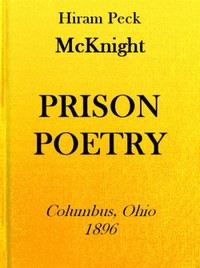
Before opening Prison Poetry — Inside the Classic, the edition data offers a quick orientation: 43,783 words, 3 hr 11 min estimated reading time, and 7 detected text sections.
The text analysis averages about 21.0 words per sentence, while the detected sections provide another way to judge how the source is divided.
Project Gutenberg metadata also associates the work with “Imprisonment -- Poetry,” connecting these edition facts with the source record’s subject description.
Explore this collection
These alternatives are selected using recorded categories and estimated reading time.
About 188 minutes
Fantasy Juvenile Worlds
43,137 recorded words. 3 minutes difference from this book's estimate.
View Gutenberg source #42566About 220 minutes
Fantasy Juvenile Worlds
50,380 recorded words. 29 minutes difference from this book's estimate.
View Gutenberg source #5419About 221 minutes
Fantasy Juvenile Worlds
50,697 recorded words. 30 minutes difference from this book's estimate.
View Gutenberg source #8497Search stored excerpts and compare books → Choose by your preferences →
Choices use stored catalog measurements. Estimates vary with reading speed. A shared category is a catalog label, not a claim that two books have the same argument or literary quality.
Search reads excerpt text stored with this catalog and links to its associated Gutenberg record. The connection is stored in the site database; this tool does not recheck that every excerpt is word-for-word identical to that external record. Excerpt search does not cover every chapter and does not verify historical publication dates.
Catalog snapshot checked: 2026-09-25. Coverage: 93 public books, 93 available source excerpts.
Read the complete public-domain text at its original source.
Read on Project GutenbergHiram Peck McKnight, an inmate at the Ohio Penitentiary in Columbus, compiled Prison Poetry in 1896, drawing on verses written by himself and fellow prisoners. The book opens with a direct address to the reader: “In leisure moments cast a look / Upon the pages of this book,” immediately establishing the work as a bid for connection across prison walls. McKnight’s preface explains that each poem “is a fair representation of the many phases that the mind of a prisoner passes through,” positioning the collection as an authentic record rather than a polished literary artifact. The catalog subjects—Imprisonment, Prisoners, Prisons, and Prisoners' writings—are borne out in the excerpts, but the poems often reach beyond confinement to dwell on lost love, childhood, and religious consolation.
The preface credits “some of the prisoners of this institution” as donors, with verses attributed “by either their name or serial number.” This dual identification—name and number—underscores the tension between individual identity and institutional classification. McKnight’s own poem “Dedication” uses the first person to speak for the collective: “I leave thee to thy fate!” The collection thus functions as a collaborative project, with McKnight acting as editor and fellow inmate. The catalog subject “Prisoners’ writings, American — Ohio — Columbus” accurately describes the work, but the excerpts show that the poems are not uniformly about prison; many, like the long narrative of May-Bell Clare, are sentimental ballads set in a world outside the walls. The prison context frames the act of writing itself as a form of resistance or solace.
The excerpts reveal a heavy reliance on 19th-century sentimental verse: idealized female beauty (“cheeks, like lilies dipped in blood”), tragic death, and religious consolation. The poem about May-Bell Clare describes a teacher who marries a childlike student, only to lose her in childbirth—a plot that echoes popular Victorian deathbed poetry. McKnight’s own lines in the opening poem declare, “here I live in an earthly HELL,” yet the collection as a whole avoids sustained bitterness. Instead, it oscillates between lament and moral exhortation, as in the preface’s hope that readers “may know that we are not devoid of true, manly, noble principle.” This emotional range complicates the catalog subject “Imprisonment — Poetry,” which might imply a narrower focus on confinement; the poems often use prison as a vantage point for universal themes.
McKnight’s preface and dedication repeatedly address the “wide, wide world” outside, creating a one-way bridge between inmate and free reader. He writes, “May you who enjoy the blessings of liberty … partake with us of our solitary musings.” This framing is central to the work’s purpose: to humanize prisoners by sharing their inner lives. The catalog subject “Prisoners — Poetry” is accurate, but the excerpts show that the poems are often less about the prison experience itself than about demonstrating that prisoners possess “noblest thoughts and resolutions.” The dedication even imagines the book as a moral agent: “Teach him the way … to lend a helping hand.” This explicit appeal to the reader’s sympathy is a key structural feature, distinguishing Prison Poetry from a simple anthology of prison verse.
Readers should approach Prison Poetry as a document of inmate self-representation rather than a polished literary collection. The poems vary widely in quality and subject, but together they offer a rare glimpse into the emotional lives of prisoners in the 1890s. McKnight’s editorial voice—apologetic, hopeful, and direct—shapes the collection as much as the verses themselves. Pay attention to the tension between the poems’ conventional sentiment and the stark reality of their origin.
Years among these shelves, I’ve seen how longing shapes a voice—McKnight’s prisoners etching faith into stone walls, a quiet ache for the small freedoms. It reminds me of that other pair, Max and Maurice, whose mischief begs the same forgiveness. One bound by bars, the other by verse, both reaching toward something lighter. Max and Maurice: A Juvenile History in Seven Tricks — Reading Companion sits nearby, a gentler echo of that same restless heart.
Save your reaction, strongest insight, and memorable passage.