About 534 minutes
The Botanic Garden, a Poem in Two Parts. Part 1: the Economy of Vegetation — A Closer Reading
Adventure Picaresque Fiction
122,606 recorded words. 62 minutes difference from this book's estimate.
View Gutenberg source #9612
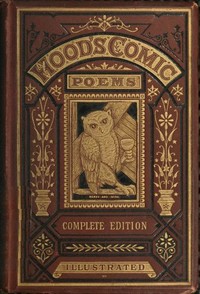
The catalog record for The Comic Poems of Thomas Hood A New and Complete Edition — Text and Context provides practical reading context through 136,868 words, 9 hr 56 min estimated reading time, and 28 detected text sections.
The text analysis averages about 23.7 words per sentence, while the detected sections provide another way to judge how the source is divided.
Project Gutenberg metadata also associates the work with “English wit and humor,” connecting these edition facts with the source record’s subject description.
Explore this collection
These alternatives are selected using recorded categories and estimated reading time.
About 534 minutes
Adventure Picaresque Fiction
122,606 recorded words. 62 minutes difference from this book's estimate.
View Gutenberg source #9612About 444 minutes
Adventure Picaresque Fiction
102,037 recorded words. 152 minutes difference from this book's estimate.
View Gutenberg source #33403About 771 minutes
Adventure Picaresque Fiction
177,300 recorded words. 175 minutes difference from this book's estimate.
View Gutenberg source #44292Search stored excerpts and compare books → Choose by your preferences →
Choices use stored catalog measurements. Estimates vary with reading speed. A shared category is a catalog label, not a claim that two books have the same argument or literary quality.
Search reads excerpt text stored with this catalog and links to its associated Gutenberg record. The connection is stored in the site database; this tool does not recheck that every excerpt is word-for-word identical to that external record. Excerpt search does not cover every chapter and does not verify historical publication dates.
Catalog snapshot checked: 2026-09-25. Coverage: 93 public books, 93 available source excerpts.
Read the complete public-domain text at its original source.
Read on Project GutenbergThomas Hood's comic verse, collected in this new and complete edition, operates through a distinctive fusion of wordplay and macabre subject matter. The preface by his son, Tom Hood, immediately establishes a paradox: the famous wit was, in appearance, 'grave and melancholy,' a man who proposed his own epitaph as 'Here lies one who spat more blood and made more puns than any man living.' This tension between bodily suffering and comic output is not merely biographical background but a structural principle in the poems themselves.
The catalog subjects list 'English wit and humor' and '19th-century poetry,' yet the excerpts reveal a humor that frequently turns on death, decay, and physical mishap. 'Jack Hall' narrates a grave-robber's trade with a jaunty meter, while 'The Epping Hunt' chronicles a disastrous deer chase whose moral—'pleasure oft eludes our grasp'—is delivered via a pun on 'slipper.' The comedy is rarely gentle; it is built from precise, often grotesque details.
Tom Hood's preface does more than introduce his father's life; it offers a theory of the comic. He argues that Hood's wit was 'the fruit of an even temperament, a cheery and contented mind' rather than mere animal spirits. This claim is tested against the poems themselves. The preface recounts practical jokes—a fake fish for April Fools, a mock-serious warning about red-spotted plaice—to illustrate a humor that avoids inflicting pain. Yet the poems in this collection frequently dwell on pain: the 'chronic ill health' of the author finds its counterpart in verses about coffins, corpses, and 'bone repose.' The preface thus frames a central question: how does a poet whose face bore the marks of suffering produce laughter that is neither cruel nor evasive? The answer, the preface suggests, lies in a 'keen appreciation of the ludicrous' that is also a form of sympathy.
Hood's puns are not decorative; they are the engine of his comic logic. In 'The Epping Hunt,' the phrase 'beasts of draught' pivots from draft animals to drinks, while 'overtaken men discussed / The overtaken deer' literalizes a metaphor. The poem's moral—'hunting after Happiness, / We only hunt the slipper'—depends on the double meaning of 'slipper' as both a shoe and a lost opportunity. 'Jack Hall' is even more densely packed: 'bone repose' conflates skeletal rest with a pun on 'bone,' and the grave-robber is called 'a perfect corsair'—a pirate of corpses. These verbal tricks are not random; they create a world where language itself is unstable, mirroring the instability of the body and social status. The reader is constantly asked to hear two meanings at once, a demand that mirrors the poet's own double vision of life as both comic and mortal.
Beneath the surface of Hood's comic narratives lies a sharp, often class-conscious satire. 'The Epping Hunt' follows John Huggins, a man who loses his horse and must pay another to ride it, only to discover the 'goodly gray' was his own. The poem mocks not just the hunt's chaos but the pretensions of its participants: 'men, by dint of drink, became / The only beasts of draught.' The 'Moral' explicitly links the hunt for deer to the futility of pursuing happiness, but the specific details—the borrowed horse, the paid rider, the 'remorse' of the transaction—sketch a critique of social climbing and misplaced values. 'Jack Hall' targets the medical profession ('the Faculty') and the commodification of the dead. The grave-robber's trade is described in economic terms: 'he drove this dead but thriving trade.' Hood's comedy, then, is never merely absurd; it consistently points to the absurdities of a society that treats bodies, animals, and even happiness as exchangeable goods.
Readers approaching this edition should attend to the interplay between the preface's portrait of a gentle wit and the poems' often grim subject matter. Hood's humor does not resolve into simple cheerfulness; it insists on holding together illness and pun, death and joke. The poems reward attention to their verbal construction—each pun, each rhyme, each metrical trick is a small argument about how to face a world that offers both 'spat blood' and laughter. This is not a collection to be skimmed for easy amusement, but one to be read with an ear for the craft that makes its darkness bearable.
That rainy afternoon, Thomas Hood’s grim laughter over Jack Hall’s rope felt strangely warm, like a hand on a cold shoulder. His jokes from the sickbed made mortality almost companionable. Later, in that same quiet, I stumbled upon a different kind of cell—Chaplin’s verses from behind bars. There was the same fierce, stubborn pulse, the same refusal to let dark walls win. Bars and Shadows: The Prison Poems of Ralph Chaplin — Text and Context spoke that same language, though its laughter was quieter, more like a held breath.
Save your reaction, strongest insight, and memorable passage.