About 192 minutes
Early American Poetry 1610-1820: A List of Works in the New York Public Library — Themes and Context
Science Fiction Utopias
44,149 recorded words. 3 minutes difference from this book's estimate.
View Gutenberg source #44962
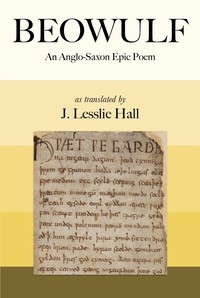
The source record for Beowulf: An Anglo-Saxon Epic Poem — Key Ideas to Explore measures this digital text at 43,379 words, 3 hr 9 min estimated reading time, and 11 detected text sections.
The text analysis averages about 18.3 words per sentence, while the detected sections provide another way to judge how the source is divided.
Project Gutenberg metadata also associates the work with “Epic poetry, English (Old),” connecting these edition facts with the source record’s subject description.
Explore this collection
These alternatives are selected using recorded categories and estimated reading time.
About 192 minutes
Science Fiction Utopias
44,149 recorded words. 3 minutes difference from this book's estimate.
View Gutenberg source #44962About 169 minutes
Science Fiction Utopias
38,641 recorded words. 20 minutes difference from this book's estimate.
View Gutenberg source #20431About 209 minutes
Science Fiction Utopias
48,047 recorded words. 20 minutes difference from this book's estimate.
View Gutenberg source #38438Search stored excerpts and compare books → Choose by your preferences →
Choices use stored catalog measurements. Estimates vary with reading speed. A shared category is a catalog label, not a claim that two books have the same argument or literary quality.
Search reads excerpt text stored with this catalog and links to its associated Gutenberg record. The connection is stored in the site database; this tool does not recheck that every excerpt is word-for-word identical to that external record. Excerpt search does not cover every chapter and does not verify historical publication dates.
Catalog snapshot checked: 2026-09-25. Coverage: 93 public books, 93 available source excerpts.
Read the complete public-domain text at its original source.
Read on Project GutenbergJ. Lesslie Hall’s 1892 translation of Beowulf announces itself as a “modest effort to reproduce approximately, in modern measures, the venerable epic.” The translator follows the Heyne-Socin text and glossary closely, adding occasional conjectures of his own. The resulting verse retains a pronounced alliterative pulse and a deliberately archaic vocabulary—words like “burnie,” “earlmen,” and “atheling” recur throughout the excerpts. Hall’s paratexts are extensive: a preface, bibliography of translations, glossary of proper names, and a list of “Words and Phrases not in General Use” frame the poem as a scholarly artifact.
Project Gutenberg assigns Beowulf to the category “Science Fiction & Utopias,” a classification that finds no support in the excerpts. The poem’s monsters—Grendel, his mother, a dragon—are presented as tangible, bloodthirsty foes, not speculative constructs. The setting is a heroic-age Scandinavia of mead-halls and sea-journeys, not a utopian future. The catalog’s secondary topics (“mythology-classics; fantasy-folklore; general-literature”) are far more apt. Readers encountering the text through the “Science Fiction” label should be prepared for a work of early medieval heroic poetry, not futuristic fiction.
Hall’s translation choices are consistently visible. He renders the Old English byrnie as “burnie” (a corslet), eorl as “earlman,” and æðeling as “atheling.” The alliterative line is preserved: “The hand-woven corslet which could cover his body” and “the light-flashing helmet that should mix with the bottoms” show a deliberate effort to echo the original’s sound-patterns. The glossary lists words “not in General Use,” signaling that Hall expected his audience to need help with terms like “swine-bodies” (boar-figures on helmets) and “mere-beast” (sea-monster). This archaizing style gives the translation a formal, slightly antiquated texture distinct from modern prose versions.
Hall’s edition is heavily annotated. The preface explains his method: “a very close reproduction of Anglo-Saxon verse would, to a large extent, be prose to a modern ear.” The bibliography lists prior translations, and the glossary of proper names identifies figures like Hrothgar and Unferth. The table of contents includes descriptive subheadings—“Beowulf makes a parting speech to Hrothgar,” “Grendel’s mother knows that someone has reached her domains”—that function as a running summary. This apparatus positions the translation as a study text, not a popular rendering. Readers should note that the Project Gutenberg file includes the full scholarly front matter, which shapes how the poem is encountered.
The excerpts reveal a translation that is both a scholarly tool and a poetic artifact. Hall’s decision to retain alliteration and archaic vocabulary creates a reading experience markedly different from modern English versions. The catalog’s “Science Fiction” label is a curiosity, not a guide. Readers interested in the poem’s textual history will find the preface and glossary valuable; those seeking a swift narrative may prefer a contemporary prose translation. The Project Gutenberg edition preserves the 1892 text complete with its original apparatus, offering a window into late-Victorian approaches to Old English literature.
Years among the stacks have taught me how Beowulf’s cold sea-wolf battles share a hush with William Morris’s shadowed medieval longing—both speak of courage worn thin by time’s slow erosion. I often place Hall’s faithful old epic near the quieter, aching verses of The Defence of Guenevere and Other Poems — Background and Themes, two voices murmuring across centuries of shared twilight.
Use these questions to collect your thoughts before moving on.