About 324 minutes
The Earthly Paradise: A Poem (Part II) — Reading Notes
Historical Psychological Social Fiction
74,497 recorded words. 15 minutes difference from this book's estimate.
View Gutenberg source #30332
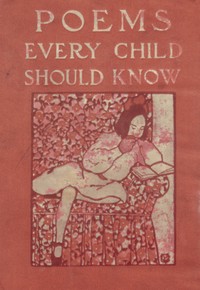
The catalog record for Poems Every Child Should Know The What-Every-Child-Should-Know-Library — Background and Themes provides practical reading context through 70,901 words, 5 hr 9 min estimated reading time, and 19 detected text sections.
The text analysis averages about 21.8 words per sentence, while the detected sections provide another way to judge how the source is divided.
Project Gutenberg metadata also associates the work with “English poetry,” connecting these edition facts with the source record’s subject description.
Explore this collection
These alternatives are selected using recorded categories and estimated reading time.
About 324 minutes
Historical Psychological Social Fiction
74,497 recorded words. 15 minutes difference from this book's estimate.
View Gutenberg source #30332About 284 minutes
Historical Psychological Social Fiction
65,228 recorded words. 25 minutes difference from this book's estimate.
View Gutenberg source #13037About 283 minutes
Historical Psychological Social Fiction
64,871 recorded words. 26 minutes difference from this book's estimate.
View Gutenberg source #46515Search stored excerpts and compare books → Choose by your preferences →
Choices use stored catalog measurements. Estimates vary with reading speed. A shared category is a catalog label, not a claim that two books have the same argument or literary quality.
Search reads excerpt text stored with this catalog and links to its associated Gutenberg record. The connection is stored in the site database; this tool does not recheck that every excerpt is word-for-word identical to that external record. Excerpt search does not cover every chapter and does not verify historical publication dates.
Catalog snapshot checked: 2026-09-25. Coverage: 93 public books, 93 available source excerpts.
Read the complete public-domain text at its original source.
Read on Project GutenbergMary E. Burt's Poems Every Child Should Know (1904) is a pedagogical anthology that arranges its contents by difficulty, moving from simple lyrics to longer narrative and patriotic pieces. The editor's preface and headnotes frame the poems as tools for moral and intellectual training, with an emphasis on memorization and recitation. Burt addresses a child reader directly in several headnotes, as when she reminds a boy of studying 'King Henry of Navarre' for a year, noting that 'we did not know the meaning of a certain word, but I found it up in Switzerland.' This personal, tutorial tone distinguishes the volume from a mere collection.
Burt's headnotes often adopt a conversational, almost maternal address to an imagined child reader. In the headnote to Macaulay's 'Ivry,' she writes: 'Laddie, aged eleven, do you remember how you studied and recited “King Henry of Navarre” every poetry hour for a year?' This direct second-person address, rare in anthologies, positions the editor as a guide who shares in the child's learning experience. Burt also reveals her own research: she discovered the meaning of a word 'up in Switzerland,' modeling intellectual curiosity. Such remarks suggest that the anthology is as much about the process of learning as about the poems themselves.
The acknowledgments page offers a revealing glimpse into the practical constraints of anthology-making. Burt notes that 'special permission has been obtained for each copyrighted poem' and that 'the right to publish has been purchased of the author or publisher, except in those cases where the author or the publisher has, for reasons of courtesy and friendship, given the permission.' She also recounts an anecdote of a teacher who 'innocently put forth a little volume of poems that she loved and admired, without asking permission of any one.' This behind-the-scenes detail underscores the legal and social negotiations that shaped the final selection, reminding readers that the canon presented is partly a product of copyright and personal connections.
The excerpt from Lord Byron's 'The Eve of Waterloo' and Macaulay's 'Ivry' illustrate the anthology's emphasis on heroic, often martial, poetry. Byron's lines—'Battle’s magnificently stern array! / The thunder-clouds close o’er it'—employ a grand, elevated diction suited to public recitation. Macaulay's poem, with its repeated exclamations ('Hurrah! Hurrah!'), is designed for oral performance, its rhythm and rhyme reinforcing a sense of collective triumph. Burt's headnote to 'Ivry' personalizes the poem by linking it to a specific child's year-long study, suggesting that such poems were meant to be internalized through repetition.
The table of contents divides the anthology into six parts, a structure that implies a progression in reading skill. While the excerpts do not reveal the exact criteria for each part, the arrangement likely moves from short, simple rhymes to longer narrative and reflective poems. This graded structure reflects Burt's pedagogical aim: to build a child's capacity for memorization and comprehension step by step. The inclusion of an index of authors and an index of first lines further suggests a practical, reference-oriented design. The anthology thus functions as a curriculum in verse, with the editor's choices shaping what a child 'should know' in terms of both content and literary form.
Readers approaching this edition should attend to the headnotes as much as the poems themselves; they reveal the editor's assumptions about childhood, education, and literary value. Burt's selections favor narrative clarity, moral certainty, and patriotic fervor, reflecting early twentieth-century American ideals. The anthology offers a historical document of what was considered essential literary knowledge for children at the turn of the century.
Holding Burt’s anthology, I remembered my grandmother’s worn copy, the margins filled with her penciled sighs. She loved the sturdy rhythms of Longfellow, yet would often set the book aside, turning to something quieter and more halting. That felt like opening A Book of Strife in the Form of The Diary of an Old Soul — Inside the Classic — not memorized uplift, but a whispered, honest struggle.
Capture what you thought, learned, and would like to remember.