About 166 minutes
Poems, translated and original — A Closer Reading
Historical Psychological Social Fiction
37,958 recorded words. 7 minutes difference from this book's estimate.
View Gutenberg source #71302
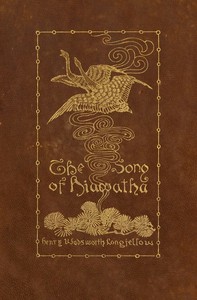
The Song of Hiawatha — Reading Notes can be approached with a clearer sense of reading commitment from its source measurements: 36,442 words, 2 hr 39 min estimated reading time, and 26 detected text sections.
The text analysis averages about 30.7 words per sentence, while the detected sections provide another way to judge how the source is divided.
Project Gutenberg metadata also associates the work with “Indians of North America -- Poetry,” connecting these edition facts with the source record’s subject description.
Explore this collection
These alternatives are selected using recorded categories and estimated reading time.
About 166 minutes
Historical Psychological Social Fiction
37,958 recorded words. 7 minutes difference from this book's estimate.
View Gutenberg source #71302About 170 minutes
Historical Psychological Social Fiction
38,991 recorded words. 11 minutes difference from this book's estimate.
View Gutenberg source #22922About 179 minutes
Historical Psychological Social Fiction
41,074 recorded words. 20 minutes difference from this book's estimate.
View Gutenberg source #5131Search stored excerpts and compare books → Choose by your preferences →
Choices use stored catalog measurements. Estimates vary with reading speed. A shared category is a catalog label, not a claim that two books have the same argument or literary quality.
Search reads excerpt text stored with this catalog and links to its associated Gutenberg record. The connection is stored in the site database; this tool does not recheck that every excerpt is word-for-word identical to that external record. Excerpt search does not cover every chapter and does not verify historical publication dates.
Catalog snapshot checked: 2026-09-25. Coverage: 93 public books, 93 available source excerpts.
Read the complete public-domain text at its original source.
Read on Project GutenbergLongfellow's The Song of Hiawatha opens with a direct address to the reader, asking, 'Should you ask me, whence these stories?' The answer unfolds in a cascade of prepositional phrases—'With the odors of the forest,' 'With the dew and damp of meadows'—that immediately establish the poem's sensory world. The verse form, trochaic tetrameter, creates a hypnotic, chant-like rhythm that persists across all twenty-two sections. This meter, borrowed from the Finnish Kalevala, gives the narrative a deliberate, almost ritualistic pace, suitable for a work that presents itself as oral tradition set down in writing.
Longfellow relies heavily on repeated phrases and parallel syntax to build momentum and reinforce key images. In the excerpt from 'The Son of the Evening Star,' the lodge 'began to tremble, / Straight began to shake and tremble,' and the transformation is described through a series of anaphoric lines: 'And behold! the wooden dishes / All were changed to shells of scarlet! / And behold! the earthen kettles / All were changed to bowls of silver!' This pattern recurs throughout the poem, creating a incantatory effect that mimics the storytelling traditions Longfellow drew upon. The repetition also serves a mnemonic function, helping listeners—or readers—follow the episodic structure.
The poem's pace varies markedly between sections. In the opening 'Introduction,' the lines are expansive and questioning, with long lists of natural details that slow the reader down. By contrast, the action sequences—such as the hunting of Pau-Puk-Keewis or the death of Kwasind—move more quickly, with shorter lines and more verbs. The excerpt from 'The Son of the Evening Star' demonstrates a middle pace: the transformation scene is described in a series of rapid, vivid images ('All were changed to shells of scarlet!'), but the dialogue that follows, with Osseo's father speaking in measured couplets, returns to a slower, more reflective tempo. These shifts in pace help distinguish between moments of spectacle and moments of moral or emotional weight.
Longfellow employs a layered narrative voice. The 'Introduction' is spoken by a first-person narrator who claims to be passing along stories he has heard: 'Should you ask me, whence these stories?' This framing device creates a sense of authenticity, as if the poem is transcribed oral tradition. Within the main narrative, characters often tell their own tales, as when Osseo's father recounts the backstory of the Evil Spirit. These embedded narratives introduce shifts in voice—from the omniscient third-person of the main story to the direct speech of the characters. The result is a polyphonic texture that complicates the idea of a single authorial voice, even as Longfellow's consistent meter and diction unify the whole.
Readers approaching The Song of Hiawatha should attend to the interplay between its oral-tradition framing and its literary craft. The poem rewards attention to its rhythmic patterns, its use of repetition as both ornament and structure, and the way its narrative voice shifts between the impersonal and the intimate. The editor's introductory note provides useful context about Longfellow's sources, but the poem itself offers a distinct experience that is neither pure folklore nor mere imitation.
Reading about Hiawatha’s long fasting in the woods, I remembered sitting with my grandfather during his final winter, both of us silent, waiting. The drumming rhythm of Longfellow’s verse felt like that stillness — and later, A Book of Strife in the Form of The Diary of an Old Soul — Inside the Classic gave me the same ache, that slow, honest turning over of one’s own soul in the dark. Some books are just companions for that.
Capture what you thought, learned, and would like to remember.