About 166 minutes
Poems, translated and original — A Closer Reading
Historical Psychological Social Fiction
37,958 recorded words. 4 minutes difference from this book's estimate.
View Gutenberg source #71302
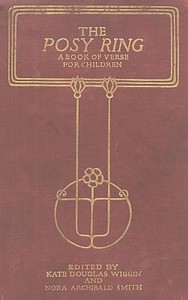
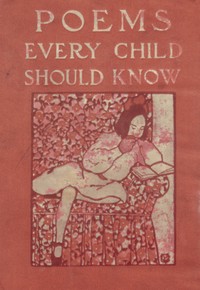
For The Posy Ring: A Book of Verse for Children — Key Ideas to Explore, the stored edition analysis reports 38,991 words, 2 hr 50 min estimated reading time, and 10 detected text sections.
The text analysis averages about 18.5 words per sentence, while the detected sections provide another way to judge how the source is divided.
Project Gutenberg metadata also associates the work with “Children's poetry,” connecting these edition facts with the source record’s subject description.
Explore this collection
These alternatives are selected using recorded categories and estimated reading time.
About 166 minutes
Historical Psychological Social Fiction
37,958 recorded words. 4 minutes difference from this book's estimate.
View Gutenberg source #71302About 179 minutes
Historical Psychological Social Fiction
41,074 recorded words. 9 minutes difference from this book's estimate.
View Gutenberg source #5131About 159 minutes
Historical Psychological Social Fiction
36,442 recorded words. 11 minutes difference from this book's estimate.
View Gutenberg source #19Search stored excerpts and compare books → Choose by your preferences →
Choices use stored catalog measurements. Estimates vary with reading speed. A shared category is a catalog label, not a claim that two books have the same argument or literary quality.
Search reads excerpt text stored with this catalog and links to its associated Gutenberg record. The connection is stored in the site database; this tool does not recheck that every excerpt is word-for-word identical to that external record. Excerpt search does not cover every chapter and does not verify historical publication dates.
Catalog snapshot checked: 2026-09-25. Coverage: 93 public books, 93 available source excerpts.
Read the complete public-domain text at its original source.
Read on Project GutenbergThe Posy Ring, edited by Kate Douglas Wiggin and Nora Archibald Smith, arranges its poems into thematic sections that guide a child reader through a year of verse. The editors’ classification—evident in the table of contents—groups poems by season, time of day, and mood, creating a structure that mirrors a child’s daily and yearly rhythms. The excerpts show a deliberate movement from morning to night, from spring to winter, and from indoor safety to outdoor adventure. This note examines three structural patterns: the seasonal framework, the recurrence of flight and music imagery, and the shifting between domestic and natural settings.
The anthology’s sections follow the calendar, with poems for each season. In the excerpts, spring appears through “The Birds in Spring” and “Baby Seed Song,” while winter poems like “Snowflakes” and “Now the Noisy Winds are Still” close the year. This seasonal movement gives the collection a narrative arc, even though the poems are standalone. The editors likely intended this structure to align with a child’s experience of the year, where holidays and weather changes mark time. The grouping also allows for contrasts: spring’s renewal versus winter’s stillness, as seen in the shift from “The Coming of Spring” to “A Chill.”
Flight appears repeatedly: swallows “twitter on the wing,” linnets “play among the leaves,” and the wind is “singing gayly all the time.” In “The World’s Music,” the speaker hears “strange sweet music like the hum of bees.” This coupling of flight and sound creates a sensory texture that ties the poems together. Even in lullabies, such as “Wynken, Blynken, and Nod,” the movement is airborne—a wooden shoe sailing among stars. The editors seem to have selected poems where motion and melody reinforce each other, giving the collection a buoyant, rhythmic quality.
Many poems in the excerpts shift between domestic interiors and natural landscapes. In “A Child’s Laughter,” the sound of laughter is compared to “bells of heaven” and “birds of heaven,” blending home and sky. “The World’s Music” moves from the child’s waking room to the mill, brook, and sea. This back-and-forth mirrors a child’s daily life: playing outside, then returning indoors for bedtime. The editors likely valued poems that acknowledge both realms, as seen in the closing lines of “Pleasures”: “Mother, fold me to your knees!”—a return to safety after exploring the world.
The excerpts show a preference for first-person child speakers, as in “Pleasures” and “The World’s Music.” These voices express wonder, fear, and trust, often addressing a parent or God. The editors’ classification reinforces this perspective: poems about play, bedtime, and nature are grouped to highlight the child’s point of view. However, the editorial hand is visible in the selection of poems that end with reassurance—love that “will stay” or a prayer for protection. This suggests a pedagogical aim: to offer comfort while encouraging curiosity. The structure itself becomes a gentle guide through childhood’s emotional landscape.
Readers approaching The Posy Ring will find that its structure rewards both random browsing and sequential reading. The seasonal groupings and recurring motifs of flight and music create a cohesive experience, while the movement between indoor and outdoor scenes reflects a child’s expanding world. Pay attention to how the editors pair poems: a lively outdoor piece often precedes a quiet bedtime verse, creating a rhythm that feels natural and soothing.
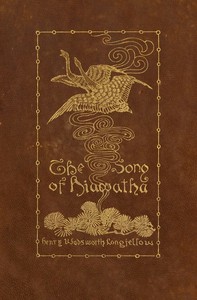
Leafing through The Posy Ring, I paused at its lullabies—that gentle sway of words meant to carry a child toward sleep. It brought back an old afternoon, reading of Hiawatha’s birch canoe gliding through twilight. Both felt like music caught in amber, a quiet rhythm promising that the world, for a moment, would hold still. I had forgotten that feeling until now. The Song of Hiawatha: An Epic Poem — Story, Setting & Ideas returned it to me.
Capture what you thought, learned, and would like to remember.