About 179 minutes
Childe Harold's Pilgrimage — Story, Setting & Ideas
Historical Psychological Social Fiction
41,074 recorded words. 10 minutes difference from this book's estimate.
View Gutenberg source #5131

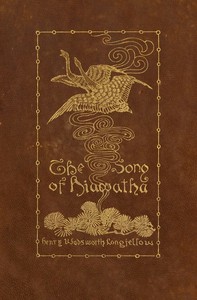
The Song of Hiawatha: An Epic Poem — Story, Setting & Ideas can be approached with a clearer sense of reading commitment from its source measurements: 43,462 words, 3 hr 9 min estimated reading time, and 11 detected text sections.
The text analysis averages about 27.6 words per sentence, while the detected sections provide another way to judge how the source is divided.
Project Gutenberg metadata also associates the work with “Indians of North America -- Poetry,” connecting these edition facts with the source record’s subject description.
Explore this collection
These alternatives are selected using recorded categories and estimated reading time.
About 179 minutes
Historical Psychological Social Fiction
41,074 recorded words. 10 minutes difference from this book's estimate.
View Gutenberg source #5131About 170 minutes
Historical Psychological Social Fiction
38,991 recorded words. 19 minutes difference from this book's estimate.
View Gutenberg source #22922About 166 minutes
Historical Psychological Social Fiction
37,958 recorded words. 23 minutes difference from this book's estimate.
View Gutenberg source #71302Search stored excerpts and compare books → Choose by your preferences →
Choices use stored catalog measurements. Estimates vary with reading speed. A shared category is a catalog label, not a claim that two books have the same argument or literary quality.
Search reads excerpt text stored with this catalog and links to its associated Gutenberg record. The connection is stored in the site database; this tool does not recheck that every excerpt is word-for-word identical to that external record. Excerpt search does not cover every chapter and does not verify historical publication dates.
Catalog snapshot checked: 2026-09-25. Coverage: 93 public books, 93 available source excerpts.
Read the complete public-domain text at its original source.
Read on Project GutenbergLongfellow's The Song of Hiawatha opens with Gitche Manito, the Master of Life, descending to create a peace-pipe and summon the tribes to cease their warfare. The poem immediately establishes a world where natural and supernatural intermingle: the Great Spirit is painted as an egg with points projecting to the four winds, while the Spirit of Evil appears as Kenabeek, the great serpent. This symbolic system—where each figure carries a specific meaning—becomes a central thread. Hiawatha himself later teaches his people to mark grave-posts with ancestral totems, inverting the symbols to indicate the departed. The poem's rhythm, borrowed from the Finnish Kalevala, drives the narrative forward with a hypnotic, repetitive cadence that mirrors the oral traditions Longfellow sought to capture.
One of the most striking passages in the excerpts is Hiawatha's lesson on picture-writing. He instructs his people to paint each grave-post with its household symbol—Bear, Reindeer, Turtle, Crane, Beaver—inverted to show that the owner is gone. This is not mere decoration; it is a system of communication. The Jossakeeds, or prophets, and the Medas, or medicine-men, paint figures on bark and deerskin for their songs, each symbol corresponding to a specific chant. The love-song, described as "the most subtle of all medicines," is recorded with a human figure in scarlet, meaning "My painting makes me powerful over others." Longfellow thus presents writing as a sacred, magical act, blending art, memory, and spiritual power. The poem itself becomes a kind of picture-writing, where every image—the serpent, the egg, the bloody hands—carries layered significance.
The second canto introduces the Four Winds, each personified as a distinct figure: Mudjekeewis, the West Wind, who becomes Hiawatha's father after slaying the great bear Mishe-Mokwa. Hiawatha's childhood is marked by his interactions with these elemental forces, including his grandmother Nokomis, who falls from the moon. The poem's cosmology is intricate: the earth is drawn as a straight line, the sky as a bow above it, with stars for night and waving lines for rain. Hiawatha's own birth is tied to the wind, and his later adventures—sailing, fishing, and hunting—are all infused with a sense of mythic inevitability. The structure of the poem, moving from the peace-pipe through Hiawatha's various exploits, mirrors the cyclical patterns of nature and the seasons, a rhythm that Longfellow maintains with careful consistency.
Despite its epic form, the poem is haunted by loss. The final cantos—"The Ghosts," "The Famine," "The White Man's Foot," and "Hiawatha's Departure"—introduce a note of elegy. Hiawatha's lamentation and the death of his friend Kwasind signal a world where the old ways are fading. The arrival of the white man is presented not as a triumph but as a quiet, ominous shift: the title "The White Man's Foot" suggests an irreversible footprint on the land. Hiawatha's departure, sailing westward into the sunset, leaves his people with a legacy of picture-writing and peace, but also with an uncertain future. Longfellow, drawing on Schoolcraft's collections, does not resolve this tension; instead, he lets the poem end on a note of dignified sorrow, as Hiawatha vanishes into the distance, a culture hero whose work is done.
Readers approaching The Song of Hiawatha should attend to its dual nature: it is both a narrative of heroic deeds and a repository of symbolic meaning. The poem rewards those who notice recurring motifs—the number four, the colors of paint, the animals that serve as totems—and who consider how Longfellow adapts oral sources into a written epic. The meter, often criticized for its monotony, actually reinforces the incantatory quality of the legends. Rather than seeking historical accuracy, one might read it as a 19th-century attempt to preserve and reshape Native American stories, a project that is as much about the poet's own culture as about the one he describes.
Reading about Hiawatha’s patient fasting, I remembered sitting by a rainy window as a child, turning pages of The Modern Scottish Minstrel, Volumes 1-6. The Songs of Scotland of the Past Half Century — Inside the Classic until my tea went cold. Both books held that same hush—listening for old voices in a language almost forgotten, yet somehow familiar as a heartbeat under snow.
Your answers remain private and are stored only in this browser.